
Active Warrants in Johnston County
Most warrants tied to local cases come from the Johnston County District Court. A judge signs the order, the Court Clerk logs it in the case file, and the Sheriff carries it out. The Sheriff also books and holds people in the county jail. City judges can issue their own warrants for city tickets and ordinance cases, and those orders stay with the city court that made them.
Johnston County does not run a public website that lists every active warrant. The official Sheriff page and the linked sheriff and jail site do not publish an active-warrant search. Because no single list exists, the safe path is a short chain of checks: call or visit the Sheriff, search the District Court docket, ask the Court Clerk, review unpaid court costs, and check the city court when a ticket is involved. Each channel covers a different kind of order.
The county's own website points warrant questions toward the Sheriff and the courts rather than a lookup tool. For a starting point, the official Johnston County Sheriff page lists the office address, phone, and the link to the sheriff and jail site.
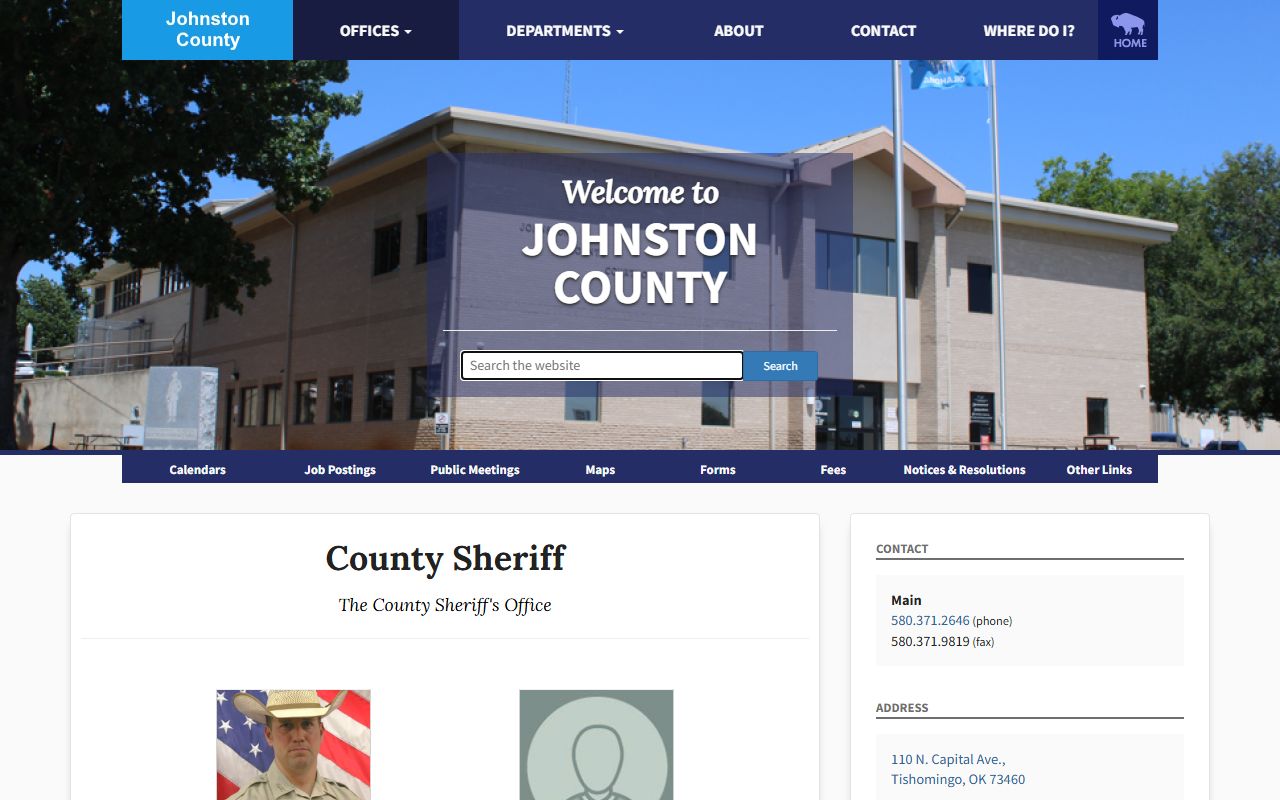
That page names Sheriff Gary Dodd and Undersheriff Christian Smith and gives the office contact details used for warrant and surrender questions. It is the best first stop when a person needs to confirm whether an order is on file.
Types of Warrants in Johnston County
Warrants are not all the same. The kind of order tells you which office holds it and where to check. An arrest warrant and a bench warrant both lead to an arrest, yet they start in different ways. A search warrant works on a place, not a person. A city warrant sits outside the District Court system entirely. The table below sorts the common types by who issues them and where a person should look.
| Warrant Type | Who Issues It | Where to Check |
|---|---|---|
| Arrest warrant | Judge, after a criminal complaint or probable-cause finding | District Court docket and the Sheriff |
| Bench warrant | Judge, for failure to appear, failure to pay, probation issues, or contempt | The court that issued it; ask the Court Clerk |
| Search warrant | Judge, on a sworn application | May be sealed before it is carried out; not always public |
| Fugitive warrant | Court, for out-of-county or out-of-state holds | The Sheriff and the issuing court |
| Municipal warrant | City judge, for city tickets and ordinance cases | The city municipal court named on the ticket |
City warrants matter most when the issue began with a parking ticket, a speeding ticket, or a code case in town. Those citations may not use the same case format as a District Court case. A person who only checks the District Court can miss a live city order.
How to Check for a Johnston County Warrant
Since there is no online warrant list, a check runs across several offices. Start with the Sheriff for arrest and surrender questions. Move to the court records for any case-based order. Use unpaid-cost and city-court checks to catch warrants that grow out of money owed or a city ticket. Work the steps in order and write down the case or citation number you find.
- Call or visit the Johnston County Sheriff at 110 N. Capital Ave., Tishomingo, OK 73460, or phone 580-371-2646. Ask about active warrant information, surrender instructions, and how a bond is posted.
- Search the District Court docket through ODCR or the OSCN docket search. Look at the case events for warrant issue, return, or quash entries.
- Contact the Johnston County Court Clerk at 403 W. Main, Ste. 201, or phone 580-371-3281. Ask whether a case has a warrant entry, a failure-to-appear entry, or a recall or quash order.
- Check unpaid fines or costs through OSCN e-payments if the issue is money owed, since unpaid costs can drive a bench warrant.
- Check the city municipal court listed on a ticket for any city-citation warrant, because those orders use their own format and are not in the District Court docket.
- Use VINE only after an arrest to track custody status, not to confirm a warrant before an arrest.
The Sheriff and jail site is the hub for custody and notification tools, even though it does not host a warrant search. The Johnston County sheriff and jail website links VINE, the sex offender registry, and the office's fingerprinting schedule.
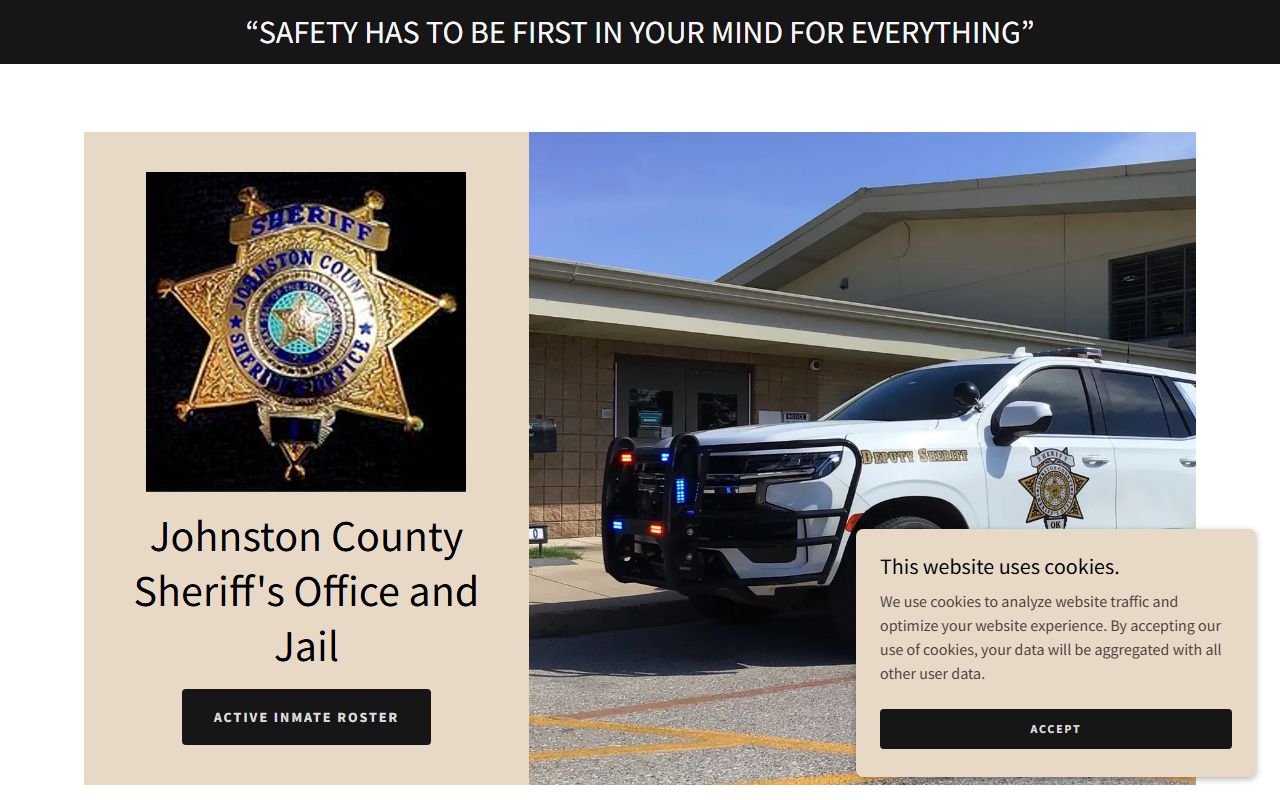
The same site is where a person confirms an inmate is in county custody before using any linked vendor or notice tool. It does not replace a direct call to the office for warrant or bond questions.
Checking Court Dockets and Unpaid Fines
Some warrants begin with money, not a new crime. When a person misses a payment on fines or court costs, a judge can sign a bench warrant. The OSCN e-payments tool lets a person look up a balance for selected District Courts, with Johnston County in the county list. The search takes a case number, a citation number, or a payment plan number. The field layout below shows what the tool asks for.
| Field Label | Type | Required | Options / Format Notes |
|---|---|---|---|
| County | Dropdown | Yes | Select a county; Johnston is listed. |
| Case Number, Citation Number, or Payment Plan Number | Text | Yes | Examples: CM-2017-100, PP-OK-2019-25, citation M972124. |
| Back | Button/link | No | Returns to the prior page. |
| Search | Button | No | Runs the payment lookup. |
The tool warns that municipal and sheriff's office citations may use a different citation-number format. So a city ticket may not appear in this District Court payment search. A driver with a city ticket should read the ticket and check the city court before assuming the state tool can take the payment.
Note: Clearing a balance does not by itself lift a warrant; confirm with the Court Clerk that the case shows the order recalled.
What to Do If You Have an Outstanding Warrant
An open warrant does not go away on its own. It can lead to an arrest during a traffic stop or any routine contact with police. The faster path is to confirm the order, learn the bond, and deal with the issuing court. The steps below follow that order. Move through them in sequence and keep a record of each call.
- Do not rely on a third-party warrant site. Call the Sheriff or the issuing court directly.
- Identify the issuing court and the case or citation number tied to the order.
- Ask whether a bond is set and what payment methods the office accepts.
- For a failure-to-appear or failure-to-pay warrant, ask the Court Clerk about the next court date, a payment plan, or the recall process.
- Consider hiring counsel, especially for a felony, domestic, probation, or out-of-county warrant.
- After the matter is handled, confirm the docket shows the order recalled, quashed, served, or disposed, since clearance may not be instant.
Important: Talk to a lawyer before you turn yourself in on a felony, domestic, or probation warrant, since a bond hearing and the order's terms can shape what happens next.
What a Johnston County Warrant Record May Show
Because the county has no online warrant list, there is no fixed set of public warrant fields to display. What a person sees depends on the source. A District Court docket may show warrant events inside a case file. A sheriff record, if the office chooses to disclose it, may show a few more details. The table below sets out fields that may appear, not a guaranteed online result.
| Field | What It May Show |
|---|---|
| Case Number | The District Court case the warrant belongs to, such as a CM or CF number. |
| Party Name | The named defendant or respondent in the case. |
| Warrant Event | Docket entries for warrant issued, returned, or quashed. |
| Charge | The offense or reason behind the order. |
| Bond Amount | Any bond a judge set for release. |
| Issuing Court and Judge | The court that signed the order and the judge of record, if public. |
Treat these as items a docket or a disclosed sheriff record might contain, not as a promised lookup. The official case-management record held by the Court Clerk controls when an online entry and the file differ.
Bond and Payment Issues for Johnston County Warrants
Bond is the security a court sets so a person can be released. A warrant record may carry a bond amount, or a judge may set one when the person is brought in. The Sheriff can explain how a bond is posted at the county jail. The Court Clerk handles fines, court costs, and payment plans for District Court cases.
When the warrant grew out of unpaid costs, a payment plan or a recall request can be the cleaner fix. Ask the Court Clerk what the case needs and whether a court appearance is required. Paying online through the state e-payment tool may settle a balance, but the court still has to act on the warrant itself. Always confirm the docket reflects the change before assuming the order is gone.
VINE Notifications After an Arrest
VINE is a free and confidential service that tracks custody status and certain case information. The Johnston County sheriff and jail site links it for exactly this purpose. It is built for the period after an arrest, not for confirming a warrant before one. A person cannot use VINE to find out whether an order is waiting.
Registration through VINE lets a victim or family member receive a notice when custody status changes, such as a release. It is one channel among the custody tools the Sheriff links rather than a warrant search.
The service shown above sends alerts once a person is booked into custody. For warrant confirmation before an arrest, the Sheriff and the District Court docket remain the right sources.
Restricted Johnston County Warrant Records
Not every order is open to the public. A search warrant may be sealed before it is carried out, so it will not appear in a docket search early on. Juvenile matters are largely confidential under Oklahoma Title 10A, which limits what a member of the public can see. Some case details, such as protected addresses and minor information, may be redacted from public copies.
Federal warrants follow a separate path through the federal courts, not the county system. Oklahoma's open records framework supports access to many government records, yet court files can be sealed and online data is only a convenience copy. The official case-management record controls under Court of Criminal Appeals Rule 2.6. For questions about access to a specific case, the Court Clerk is the office to ask.
People resolving a warrant issue often also need the underlying case. The full criminal case file and any charge detail live in the Johnston County criminal court records, and current custody shows on the county jail roster.